ChargePoint Home Flex vs Emporia EV Charger: Which is the Best EV Charger for Your Home in 2025?
Choosing the right home EV charger is a critical decision that affects your daily routine, your electricity bill, and your vehicle's readiness. As you search for the Best EV Chargers for home 2025, two names consistently rise to the top of expert lists: the premium ChargePoint Home Flex and the value-packed Emporia EV Charger. One is hailed for its seamless smart experience, while the other is praised for delivering pro-level power at a surprisingly affordable price. This comparison dives deep into their strengths and weaknesses, moving beyond simple rankings to help you understand which charger truly fits your lifestyle, budget, and technical setup. Whether you prioritize a polished app or maximizing your dollar, this guide will provide the clarity you need.
Quick Comparison Overview
The ChargePoint Home Flex is the best overall smart charger, offering an unmatched user experience with its intuitive app and detailed energy tracking. The Emporia EV Charger is the best value with load management, delivering nearly identical high-power performance and advanced grid-protection features for a significantly lower cost. Your choice boils down to premium polish versus powerhouse value.
Performance & Quality Comparison
Both chargers are powerhouses capable of fully replenishing most EV batteries overnight. The ChargePoint Home Flex leads slightly in raw output, capable of 50 amps (12.0 kW) when hardwired, enabling the fastest possible Level 2 charging for homes. The Emporia is close behind at 48 amps (11.5 kW), a difference that translates to mere minutes in a full charging session.
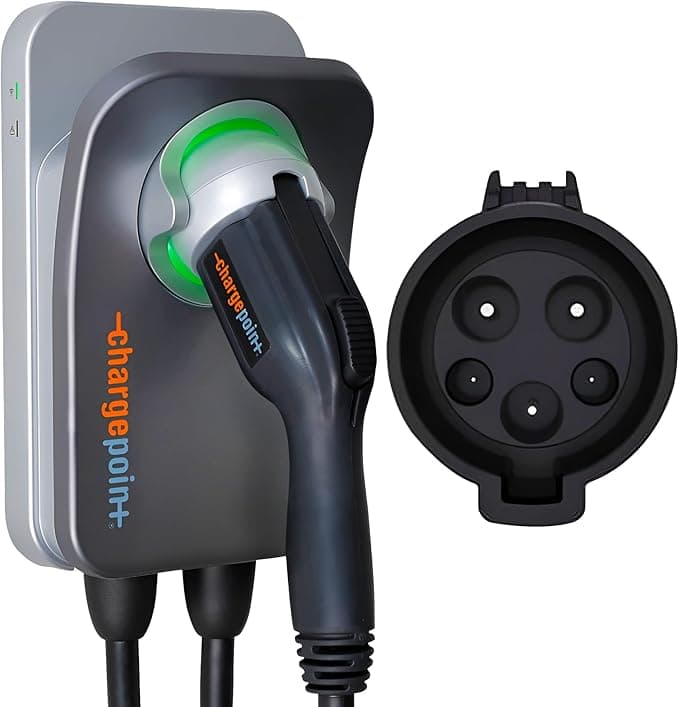
Where they diverge is in physical design and installation flexibility. The ChargePoint Home Flex excels with thoughtful touches like built-in cord management with a notch for wrapping and a center-mounted dock for the connector. Its 23-foot cable is adequate for most garages but may limit placement if your parking spot is far from the unit. The Emporia EV Charger, while powerful, has a thicker and heavier charging cable, which some users may find less maneuverable. A key installation note: to achieve its highest 50-amp output, the ChargePoint requires a hardwired connection, whereas the Emporia offers more plug-in flexibility at its top tier.
Features & Functionality Comparison
This is the core battlefield between these two top contenders for Best EV Chargers for home 2025.
The ChargePoint Home Flex wins on user experience. Its app is renowned for being intuitive, providing clear detailed cost tracking and utility rate plan support. It can estimate charging costs based on your specific electricity plan and even tell you how many miles or battery percentage you've added. It’s a streamlined, purpose-built tool for EV charging.
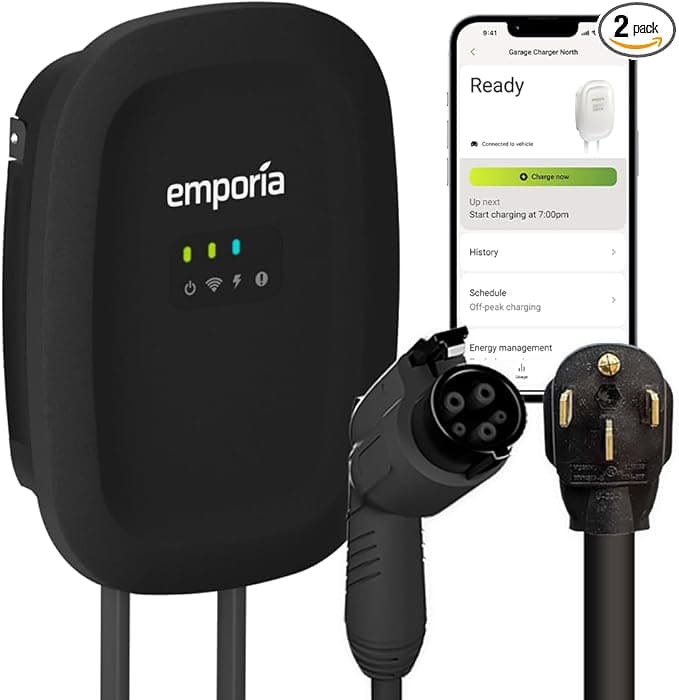
The Emporia EV Charger’s strength is advanced, integrated energy management. Its standout feature is affordable load-management functionality, which can monitor your home's total electrical usage and automatically pause charging if you're nearing your panel's limit—a potential cost-saver on electrical upgrades. However, its app can feel overly complex as it's designed to manage Emporia's entire ecosystem of home energy monitors, not just your car. It also doesn't use your specific vehicle model to estimate miles gained, offering a more generic readout.
Price & Value Analysis
The price gap is a major differentiator. The ChargePoint Home Flex sits in the $539 - $599 range, positioning it as a premium product. You are paying for its refined software, brand reputation, and polished hardware design.
The Emporia EV Charger, priced between $429 - $519, undercuts its rival by a significant margin while matching it on core performance. The value proposition is exceptional, especially considering it includes advanced load management—a feature that often costs extra with other brands. For budget-conscious buyers who want maximum power and smart features without the premium price tag, the Emporia is compelling.
Pros and Cons Side by Side
| Feature | ChargePoint Home Flex | Emporia EV Charger |
|---|---|---|
| Key Strength | Superior app & user experience | Outstanding value & load management |
| Max Power | 50 amps (12.0 kW) | 48 amps (11.5 kW) |
| Price | Higher ($539 - $599) | More competitive ($429 - $519) |
| App Experience | Pro: Intuitive, detailed tracking | Con: Can be complex, less EV-focused |
| Unique Advantage | Utility rate integration, sleek design | Built-in load management, NACS option |
| Main Limitation | Shorter 23-foot cable, higher cost | Heavier cable, generic charge stats |
Best Use Cases: Who Should Buy Which?
Buy the ChargePoint Home Flex if:
- You want the most user-friendly, polished smart charging experience available.
- Detailed energy and cost tracking aligned with your utility's rate plan is important to you.
- You appreciate thoughtful hardware design and built-in cord management.
- Your budget allows for investing in a premium product with top-tier support.
Buy the Emporia EV Charger if:
- Value is your top priority and you want near-top-tier power for hundreds less.
- Your home's electrical panel is near capacity and you need load management to avoid an expensive upgrade.
- You own or plan to own a vehicle with a NACS (Tesla-style) port, as Emporia offers that connector option.
- You're comfortable with a more technical app interface to unlock advanced energy management features.
Final Verdict & Recommendation
Both the ChargePoint Home Flex and Emporia EV Charger are excellent choices that rightly earn their spots as leaders for the Best EV Chargers for home 2025. There is no wrong decision, only the right decision for your specific needs.
For most tech-savvy EV owners who want a seamless, set-it-and-forget-it experience with insightful data, the ChargePoint Home Flex is our top recommendation. Its superior app integration and quality feel justify its higher price for those who value convenience and detail.
However, if you are looking to maximize performance per dollar and have any concern about your home's electrical capacity, the Emporia EV Charger represents the smarter financial and practical choice. It delivers astounding capability and future-proof load management at a price that is difficult to beat. Ultimately, weigh your desire for a premium user interface against your need for advanced electrical management and upfront savings. Whichever you choose, you'll be getting a powerful, reliable charger that will serve your electric vehicle for years to come.