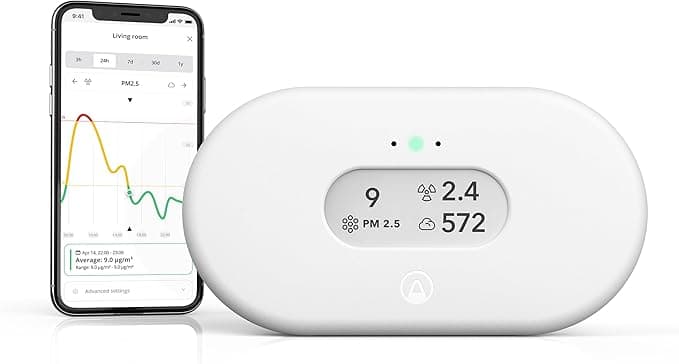
Selecting the right radon monitor is crucial for ensuring long-term home safety, as radon is a leading cause of lung cancer. The Product-Review-Crew analyzed data from multiple sources to compare the top five models for 2026, each serving a unique purpose. The primary decision factors are monitoring method (continuous vs. single test), data speed, connectivity, additional sensors, and price. The Airthings Corentium Home Radon Detector earns the top ranking for its exceptional balance of accuracy, simplicity, and value. It provides validated, professional-grade readings for both short-term (24-hour, 7-day) and long-term averages directly on its clear LCD screen. Its portability, powered by long-lasting batteries, allows for optimal placement in any area of concern. Its main limitation is the lack of smart connectivity, making it ideal for users who prefer a standalone device and are willing to check the screen manually. In contrast, the Airthings View Plus Smart Air Quality & Radon Monitor is the ultimate connected hub for overall indoor environmental health. It monitors seven parameters, including radon, particulate matter (PM2.5), and CO2, syncing data continuously via WiFi to a comprehensive app. This makes it perfect for health-conscious individuals, smart home enthusiasts, or those managing conditions like asthma, though its premium price and complexity may be excessive for someone focused solely on radon. For speed, the RadonEye RD200 is unparalleled. Using professional pulsed ion chamber technology, it provides a reliable average reading in about one hour, compared to the days or week required by other electronic monitors. Its always-on LCD provides instant visibility, which is valuable for real estate professionals, contractors, or homeowners who need quick answers during mitigation system installation. Its design is more utilitarian and it requires AC power, limiting placement flexibility. The Airthings Wave Plus Smart Radon Detector occupies a strategic middle ground. It offers smart features and monitors five additional air quality factors (VOCs, CO2, etc.) but uses Bluetooth instead of WiFi. Its unique gesture-controlled LED ring provides a discrete, at-a-glance status without an app. This model suits users who want more context than just radon levels and appreciate smart features but do not require remote access or smart home integration. Its 18-month battery life and sleek design allow for discreet, permanent placement. Finally, the First Alert RD1 Radon Test Kit represents the traditional, low-cost approach. It is a passive charcoal canister that provides a short-term snapshot (2-4 days) which must be mailed to a lab for analysis. While extremely affordable and simple, it is a single-use product whose results can be skewed by daily radon fluctuations. It is best for initial screening or for buyers fulfilling a real estate transaction requirement on a tight budget, but it is wholly inadequate for understanding long-term exposure, which requires continuous monitoring. In conclusion, for most homeowners seeking reliable, ongoing radon data, the Airthings Corentium Home Radon Detector offers the best performance-to-price ratio. Tech-savvy users wanting full environmental data should invest in the Airthings View Plus Smart Air Quality & Radon Monitor. Those needing immediate results should choose the RadonEye RD200, while the Airthings Wave Plus Smart Radon Detector is an excellent smart upgrade for the radon-conscious homeowner. The First Alert RD1 Radon Test Kit remains a valid tool for one-time, budget-conscious screening.



Comments
Leave a Comment