#1

Ray-Ban Meta Wayfarer (Gen 2)
4.7(1,183 reviews)
$379 - $389
- +Seamless AI assistant integration
- +High-quality 12MP camera with 3K video
- +Stylish, normal-looking design
This review evaluates the top five smart glasses of 2026, focusing on their features, performance, and ideal use cases. The Ray-Ban Meta Wayfarer (Gen 2) stands out as the best overall option, combining refined design with improved AI features and everyday usability. The XREAL Air 2 Pro delivers the best AR display experience with enhanced brightness and visual clarity for immersive viewing. The RayNeo Air 4 Pro offers excellent value with solid AR performance at a more accessible price, while the Viture Pro XR Glasses provide a premium AR experience with advanced display technology. The Solos AirGo 3 excels in AI functionality, featuring integrated ChatGPT capabilities for hands-free assistance.
via Amazon.com
Check Price at AmazonAs an Amazon Associate, we may earn from qualifying purchases at no extra cost to you.
Ray-Ban Meta Wayfarer (Gen 2) offers the best balance of style, AI features, and everyday usability in smart glasses.
The Ray-Ban Meta Wayfarer (Gen 2) defines what smart glasses should feel like in everyday life, combining classic eyewear design with modern AI-driven functionality. Equipped with a 12MP camera capable of capturing 3K video, it allows users to take photos and record moments hands-free with impressive clarity. The integrated AI assistant responds quickly to voice commands, enabling messaging, streaming, and real-time information access without needing to reach for a phone. Open-ear speakers deliver surprisingly clear audio for music and calls while maintaining environmental awareness. Battery life typically lasts a few hours of active use, supported by a compact charging case for extended sessions.
Unlike AR-focused competitors, these glasses do not include a visual display, keeping the experience simple and socially acceptable in most environments. Privacy remains a consideration due to the always-ready camera, though LED indicators help signal recording. For users seeking a practical, stylish, and intelligent wearable, the Ray-Ban Meta Wayfarer stands as the top smart glasses choice in 2026.

via Amazon.com
Check Price at AmazonAs an Amazon Associate, we may earn from qualifying purchases at no extra cost to you.
XREAL Air 2 Pro delivers one of the best AR display experiences with excellent visuals and improved immersion features.
The XREAL Air 2 Pro stands out as one of the most refined AR display glasses available in 2026, offering a sharp and immersive viewing experience through its micro-OLED panels. With a 120 Hz refresh rate and vibrant color reproduction, it creates a large virtual screen ideal for movies, gaming, and productivity tasks. The addition of electrochromic dimming allows users to adjust lens opacity, significantly improving immersion compared to earlier models. Its lightweight frame makes it comfortable for extended use, while the design remains relatively subtle compared to bulkier XR headsets.
The glasses rely on a wired USB-C connection to smartphones, laptops, or gaming devices, limiting standalone capabilities but ensuring stable performance. While the AR ecosystem continues to evolve, current functionality focuses more on screen mirroring than interactive augmented reality. Audio is handled through directional speakers, offering decent quality without isolating the user from surroundings. For those prioritizing display quality and comfort, the XREAL Air 2 Pro remains a leading choice in the AR glasses category.

via Amazon.com
Check Price at AmazonAs an Amazon Associate, we may earn from qualifying purchases at no extra cost to you.
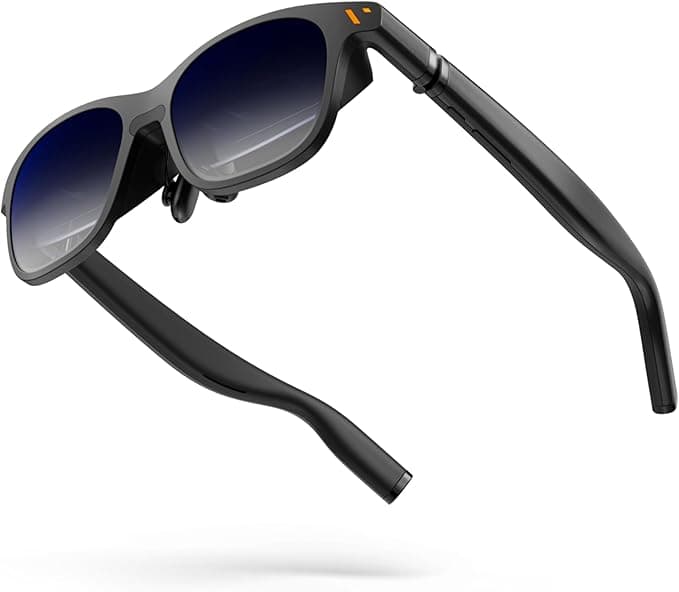
RayNeo Air 4 Pro offers a balanced AR experience at a more affordable price point, making it a strong value option.
The RayNeo Air 4 Pro positions itself as a compelling value option in the AR glasses market, delivering a capable viewing experience without the premium price tag of higher-end competitors. Its display offers solid brightness and HDR support, producing vibrant visuals suitable for streaming content, gaming, and casual productivity. With a 120 Hz refresh rate, motion appears smooth, and overall clarity is sufficient for most use cases, though not quite at the level of top-tier models. The lightweight design ensures reasonable comfort during extended sessions, making it suitable for travel or daily use.
Like most AR glasses in this category, it depends on a wired connection to external devices such as smartphones or laptops, limiting standalone functionality. The software ecosystem is functional but less polished, with fewer advanced features and integrations compared to leading brands. Audio performance is adequate for personal use, though not particularly immersive. For users seeking an affordable entry into AR displays with reliable performance, the RayNeo Air 4 Pro delivers strong overall value in 2026.
via Amazon.com
Check Price at AmazonAs an Amazon Associate, we may earn from qualifying purchases at no extra cost to you.
The Viture Pro XR Glasses offer the brightest AR display with premium features like adjustable focus and immersive dimming, making them ideal for work and entertainment.
The Viture Pro XR Glasses stand out as a premium option in augmented reality, delivering a sharp 1080p display with up to 1,000 nits of brightness that surpasses most competitors. Adjustable diopter dials eliminate the need for prescription inserts, ensuring clear visuals for a wide range of users, while the electrochromic dimming film enhances immersion in bright environments. Through the SpaceWalker app, the glasses support spatial computing features such as multi-monitor setups and advanced workspace functions when paired with compatible devices.
While the core hardware is impressive, accessing the full ecosystem requires add-ons like the Mobile Dock, which significantly increases total cost. Audio performance is adequate but lacks depth, and the frame is bulkier than standard eyewear. For users seeking the brightest displays and most advanced AR features available, the Viture Pro XR Glasses deliver a class-leading experience in 2026, albeit at a premium price.

via Amazon.com
Check Price at AmazonAs an Amazon Associate, we may earn from qualifying purchases at no extra cost to you.
Solos AirGo 3 offers seamless ChatGPT integration in lightweight smart glasses, ideal for AI assistance and live translation on the go.
The Solos AirGo 3 stands out for its robust ChatGPT integration, offering one of the most accessible ways to use AI via smart glasses. Its lightweight design ensures comfort during extended wear, though battery life is limited to about two hours per charge. ChatGPT enables natural conversations and queries, while the live translation feature supports basic communication. The glasses also function as Bluetooth headphones for calls and music, though audio quality is average with limited bass. Controls can be finicky, with the virtual button requiring precise positioning, and overall functionality is more limited compared to competitors like Ray-Ban Meta.
The modular SmartHinge design allows frame and lens customization for added versatility. For users prioritizing ChatGPT integration and willing to accept modest battery life and control limitations, the Solos AirGo 3 delivers a capable and reasonably priced solution in 2026.
Product-Review-Crew analyzed multiple sources to compare the top five smart glasses of 2026. The Ray-Ban Meta Wayfarer (Gen 2) earns the top position as best overall, blending classic eyewear design with upgraded AI-driven features. It integrates a high-quality camera and improved audio system, making it ideal for capturing content, streaming, and hands-free communication, though frequent use can impact battery life and it lacks a true AR display.
The XREAL Air 2 Pro delivers the best AR display experience, featuring improved brightness, contrast, and electrochromic dimming for better viewing in varied lighting conditions. Its immersive screen and refined visuals make it excellent for media consumption, though it still requires a connected device for full functionality. The RayNeo Air 4 Pro stands out as the best value AR glasses, offering a strong balance of display quality and affordability. It provides a large virtual screen experience suitable for entertainment and productivity, though build quality and advanced features are slightly behind premium competitors. The Viture Pro XR Glasses continue to define the premium AR category with high brightness, sharp visuals, and adjustable diopter controls for personalized viewing. Its electrochromic film enhances immersion, but the full experience often requires additional accessories and comes at a higher cost.
Finally, the Solos AirGo 3 focuses on AI-powered functionality, integrating ChatGPT for voice commands, live translation, and real-time assistance. While highly useful for productivity and communication, its limited display capabilities and shorter battery life make it less versatile for media-focused users. Each model excels in a distinct area, from overall usability and AR immersion to value and AI integration, helping users choose the best smart glasses based on their priorities.
James has reviewed consumer electronics and gadgets for over 6 years. He specializes in audio equipment, cameras, and smart home devices.
Last updated:
Based on our analysis of thousands of verified user reviews, Ray-Ban Meta Wayfarer (Gen 2) is the top-rated Smart Glasses in 2026, earning our Best Overall award for its combination of performance, value, and reliability.

Comments
Leave a Comment